Product Sense Questionaire

Strengths
- Offline Access: Save and read content without the internet.
- Simple Interface: Clean, easy-to-use design.
- Cross-Platform: Works on web, iOS, Android, and extensions.
- Versatile Saving: Save from apps, browsers, and social media.
- Text-to-Speech: Listen to articles on the go.
- Smart Recommendations: Personalized article suggestions.
- Tags for Organization: Easy content categorization.
- Ad-Free Premium: Full-text search and permanent storage for premium users.
- Distraction-Free: Clutter-free reader mode.
Weaknesses
- Paywall Features: Full-text search and permanent storage require premium.
- Cumbersome Tags: Managing tags can feel tedious.
- Limited Notes: Minimal annotation options.
- Manual Organization: No auto-categorization for saved content.
- Inconsistent Recommendations: Suggestions may not always match interests.
- Pricey Premium: Subscription cost feels high for some.
- No Collaboration: Lacks sharing or co-editing features.
- Limited Media: Poor support for podcasts or interactive content.
- Sync Issues: Occasional device sync problems.
- Content Loss: Free users lose access if source content disappears.
— — — — — — — — — — — — — — — — — — — — — — — — — — — — — — — —
Looking at user reviews on the app store or other sources, identified some common user concerns or requests.
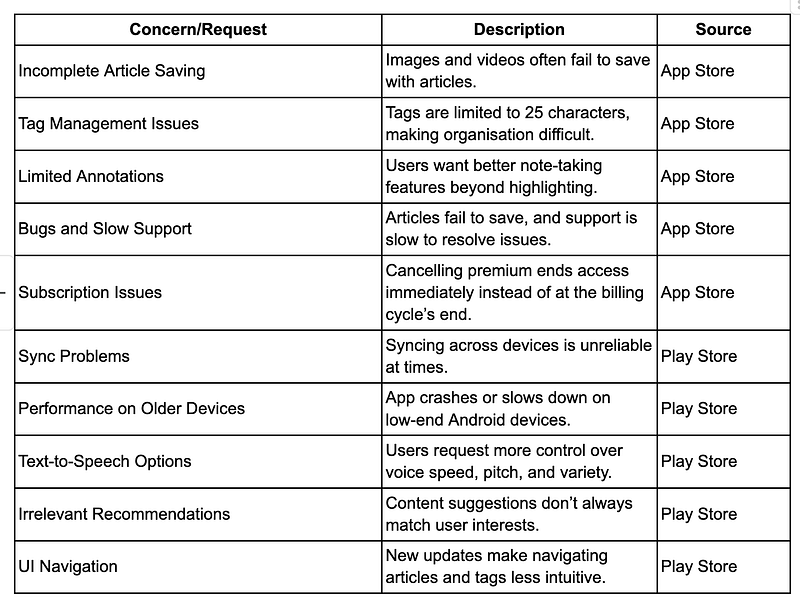
I’ve listed these manually skimming across the reviews. However, in the long term, several tools can crawl Play Store and App Store reviews to extract insights, identify repetitive issues, and track user feedback trends. Eg: AppFollow, Appbot, UXCam.
Python libraries like BeautifulSoup, Scrapy, or Google Play Scraper can be used to build custom crawlers. They are very useful because they are Tailored to exact needs, allowing specific filters for issues. These tools help prioritise feedback, address critical user pain points, and improve overall app satisfaction.
— — — — — — — — — — — — — — — — — — — — — — — — — — — — — — — —
Proposing 2–3 specific improvements or new features that could make the Pocket app better with simple wireframes to illustrate the proposed changes with the right reasoning.
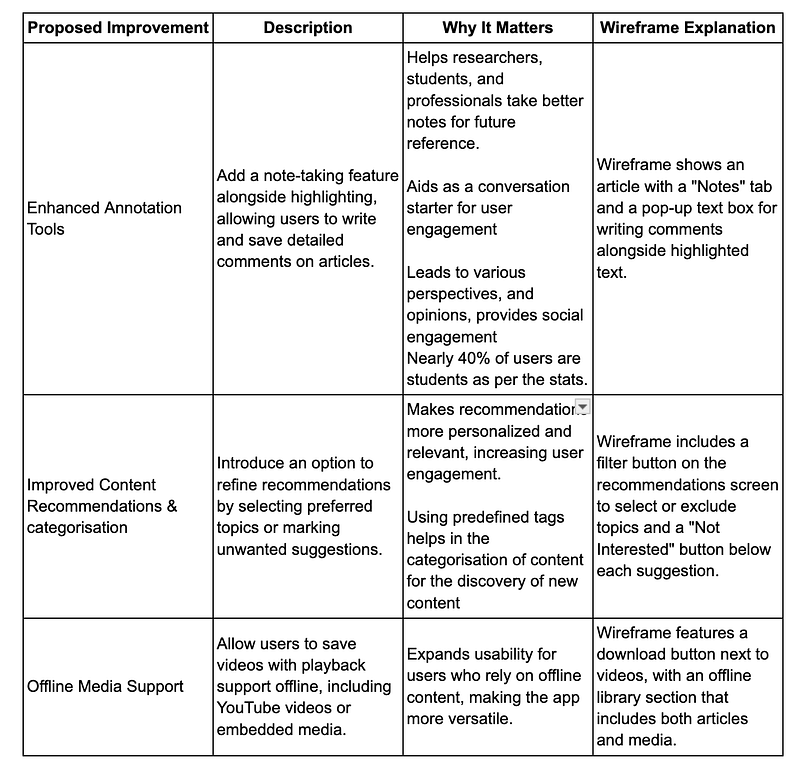
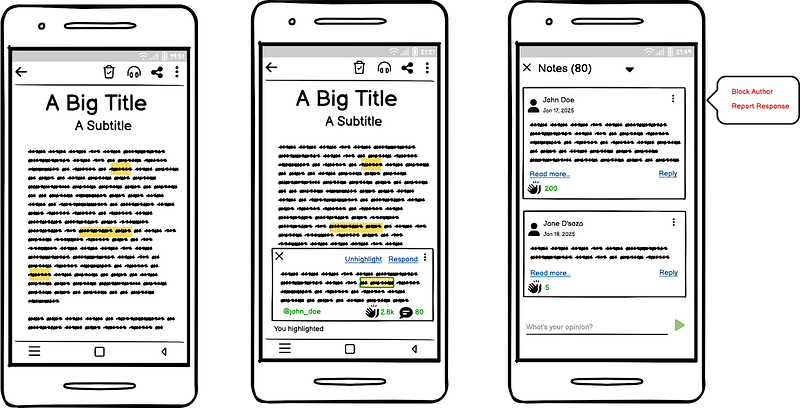
- Enhanced Annotation Tool:
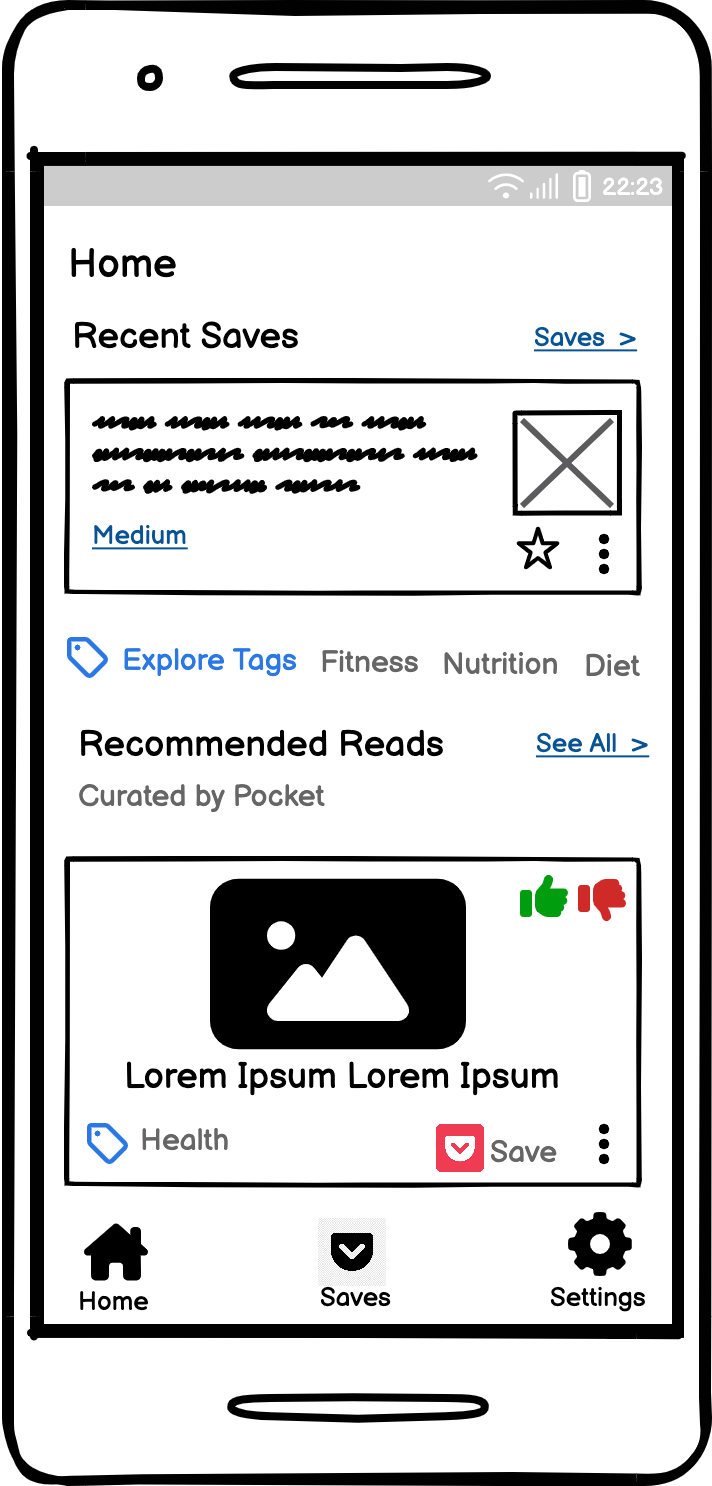
2. Improved Content Recommendations & categorisation
3. Offline Media Support

— — — — — — — — — — — — — — — — — — — — — — — — — — — — — — — —
Prioritising the suggested improvements, considering impact and feasibility. Identifying the key metrics you would track to measure the success of the proposed enhancements.

Explanation:
- Enhanced Annotation Tools are crucial for increasing user engagement, especially for professionals and researchers, with moderate development effort. Opens opportunities for communication among the audience.
- Improved Content Recommendations require minimal effort and significantly enhance personalization. Also, opens up the universe of tags & content for discoverability for user engagement.
- Offline Media Support has a high impact on usability but is technically more complex, hence ranked slightly lower.
The key metrics to track for the success of delivering Enhanced Annotation Tools as P0 are listed below –
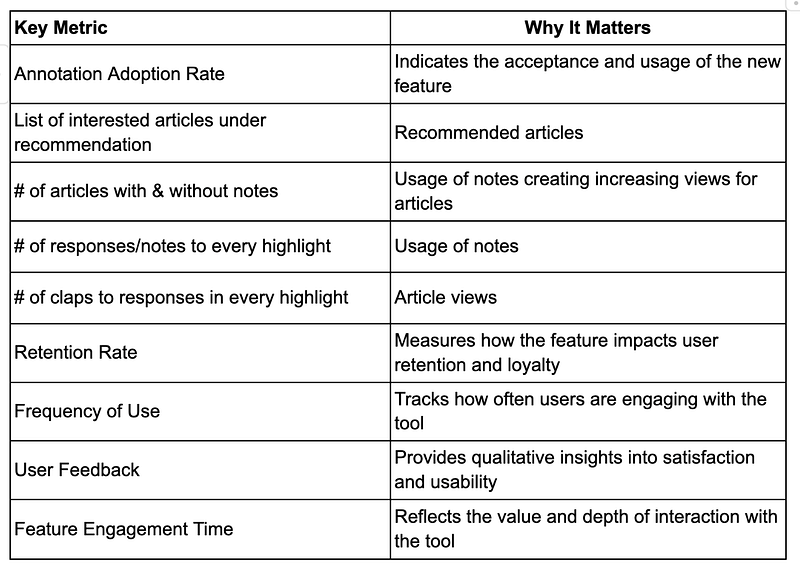
Top Priority Metrics:
- Annotation Adoption Rate — Core indicator of feature success
- User Engagement — Leading to session times & app opens
- Retention Rate — Measures long-term impact on user behaviour
- User Feedback — Direct gauge of user satisfaction and areas for improvement
 Prathima's Miles & Milestones
Leave a comment