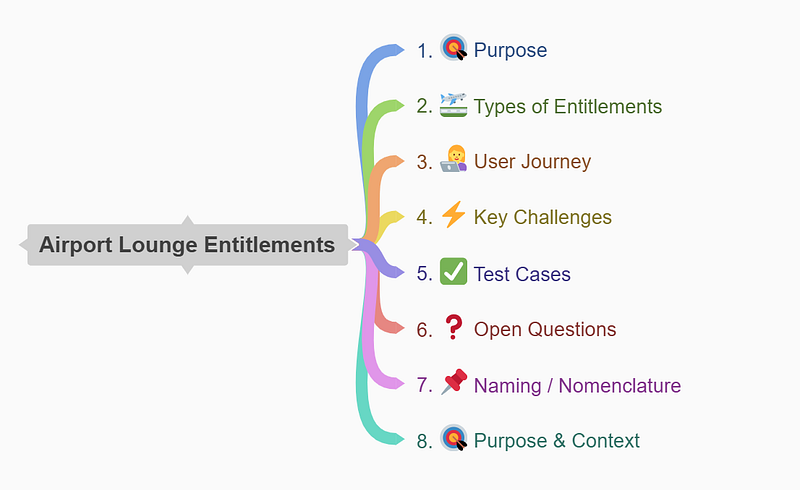
🎯 What Are Entitlements, Really?
In simple terms, entitlements are benefits customers can redeem as part of their membership. They come in different flavours:
- Regular: The standard entitlements that come with a membership plan. Annually, it’s one or two domestic & one international entitlement that can be availed at airport lounges.
- Complimentary: Goodwill passes offered to resolve issues or reward loyalty. This is typically provided to a regular customer who has experienced an inconvenience or reported negative feedback, ensuring they do not churn from the ecosystem.
- Guest Access: Extending benefits to a friend or family member. These are the +1 options which can be paid at the counter.
- Paid Visits: Optional benefits that can be purchased on demand. Once the annual entitlements are exhausted, the newer ones tend to be paid ones.
- Fast-track / Pre-book: Premium perks that speed up the experience. This is to avoid the queue at the counter.
Think of entitlements as “currencies of experience” — ways a company can reward, delight, and retain customers.
👩💻 Walking Through the Customer Journey
For entitlements to actually feel valuable, they need to show up in the right place at the right time. A smooth user journey looks like this:
- Pass Allocation & Display: Customers see their entitlement directly in the app, linked to their membership card. No refreshing, no guessing.
- Notifications: A gentle nudge when a new entitlement is added — “You’ve got a complimentary lounge visit!”
- Zero State: If no entitlement exists, don’t confuse the customer with unnecessary labels.
- Usage & Redemption: Scan a digital membership card at the lounge; counters automatically update.
- Expiry & Retention: If an entitlement expires, it stays visible with a red “Expired” tag. Transparency builds trust.
- History: Customers can revisit where and how they used their entitlements, just like a transaction log — but for experiences.
⚡ Challenges Under the Hood
Designing entitlements isn’t just about UX — it’s about answering tricky product questions:
- Which membership should the entitlement sit under if a user has more than one?
- What happens if multiple complementary passes are added at different times?
- Should expired or used-up entitlements disappear or stay visible?
- How do you handle guest usage without breaking the system?
Every small decision affects customer trust. Hide too much, and users flood support with queries. Show too much, and you risk clutter.
✅ Testing the Experience
Before rolling out, companies need to test for real-world edge cases:
- Does a complimentary pass get used before a regular one?
- What happens if a customer tries to redeem at a non-eligible lounge?
- How do counters update in real-time?
- If something fails, is there an easy support path?
These aren’t glamorous scenarios, but they’re the ones that prevent angry tweets and frustrated customers.
❓ The Naming Dilemma
Language matters. Should it be “Complimentary Visit”? Or “Domestic Complimentary Member Entitlement”? The naming needs to be short, clear, and human — otherwise, it risks sounding like fine print instead of a benefit.
🚀 The Road Ahead
While complimentary lounge visits are the starting point, entitlements can expand much further:
- Exclusive partner experiences (think concerts, dining, events)
- Tiered benefits for premium members
- Gamified rewards to encourage engagement
- Bundled guest + member passes for shared experiences
- Rest, Game, Spa, Gym, Restaurants, & many others can be included
The vision? Turning entitlements into a lifestyle ecosystem rather than a transactional perk.
✨ Why It Matters
In the end, entitlements aren’t about lounge access or free visits. They’re about how a brand shows care when it matters most.
A complimentary benefit offered at the right moment can do what no apology email can — rebuild trust, delight a customer, and turn a negative experience into loyalty.
That’s the power of designing entitlements well.
 Prathima's Miles & Milestones
Leave a comment