Here’s exactly what I’d do to get back on track

The first time I decided to “get back into running,” either after an injury or while switching hobbies, I laced up my shoes, hit the pavement, and tried to run like I did earlier with the ego-engraved thinking — I can get back easily, I’ve completed several ultra-marathons. On a positive note, I made it. Maybe half a mile before, though, I was gasping, frustrated, and convinced I wasn’t “a runner” anymore. There was no rhythm in my breathing or my cadence.
It wasn’t the last time I’d quit. Life, injuries, offseason, weather, work, travel, switching hobbies, and laziness — they all forced me to restart. Each restart felt like failure at first, but eventually I realised: every beginning was a lesson. And if I had to start from absolute zero again tomorrow, here’s exactly how I’d do it — without the mistakes that used to derail me.
1. I’d start by walking — proudly.
The first time I restarted, I saw walking as defeat. People cheered, saying, ”Prathima, do not walk. Run!” Now I know it’s how you build back safely. Elites call it recovery or intervals. For me, it’s the foundation to get back my breathing and running in sync with each other, such that it feels normal.
2. I’d ignore pace and distance.
I used to obsess over speed and miles. All it did was crush my motivation. Because we are not all the same, and we’re built differently. My runner friends from Jammu or Uttarakhand have insane breathing skills in elevation, where it’s almost impossible for me to even walk up the hills, forget running them. Now, I watch only heart rate and time. Speed comes later — when you stop forcing it.
3. I’d make it joyful, not punishing.
I’ve had phases where running felt like penance. One day of no practice is two days behind schedule, I heard from all coaches. It may be true. But at times the body does need to rest & replenish. One hour of extra sleep is not a crime once in a while. The next day, I’d jump into the training with all my fresh energy. What saved me was making it playful again: scenic routes, photo stops, catching sunrises, even runs where the goal was just to enjoy the air, chatting with friends, such that breathing gets normal.
4. I’d put a tick on the calendar.
Sometimes, going old school works as it tricks the brain. I’d tick the date on my calendar every day since it gives me the feeling of accomplishment. My biggest enemy was inconsistency. Now, I treat running like an appointment. Even if I’m tired, I’ll show up for a gentle jog or walk. Bank the win, feed the habit.
5. I’d stop comparing.
I used to scroll Strava, measuring myself against people who’d been training for years. The only runner that matters is yesterday’s me. And funny enough, runners cheer hardest for beginners. It’s a healthy audience of runners, wherever you go, as I’ve only heard positivity & optimism.
6. I’d set a goal — and dig into the why.
Signing up for a 10k gave me a race date, but what got me through was the why behind it. Until 7k, it’s the training that helps you. The next 3k is when we fly with the race day vibes. For me, it was proving to myself that I could rebuild. That’s why it mattered more than motivation.
7. I’d find my people.
The loneliest runs nearly broke me. Joining a group cut my learning curve in half. Runners love sharing mistakes; we’ve already made them, so you don’t have to. Because of running groups, I’ve friends across all age groups, and all walks of life. It’s always nice to get a different perspective.
8. I’d think decades, not weeks.
At one point, I trained like I only had months before my next race. It’s never enough days as we start the countdown, and before you know it, it’s time for tapering before the race. That mindset burned me out. Now, I see running as a lifelong practice — anchored by sleep, strength, recovery, and balance. Happy or sad, running became my companion. Long runs are always my therapy sessions with myself, where I make all of the toughest decisions of life. It is such a refresher.
9. I’d build accountability.
When life got noisy, I stopped. What got me moving again was accountability — signing up for charity runs, finding a running buddy with similar goals as mine, or even hiring a coach. External anchors matter.
10. I’d use common sense.
Every time I ignored pain, it became an injury. Every time I rested early, I came back stronger. A week off never ruins progress. Denial does.
11. A secret!
Never announce your next race. Just train consistently and appear on race day. When asked, say last-minute registration! Less pressure on yourself and from the people around.
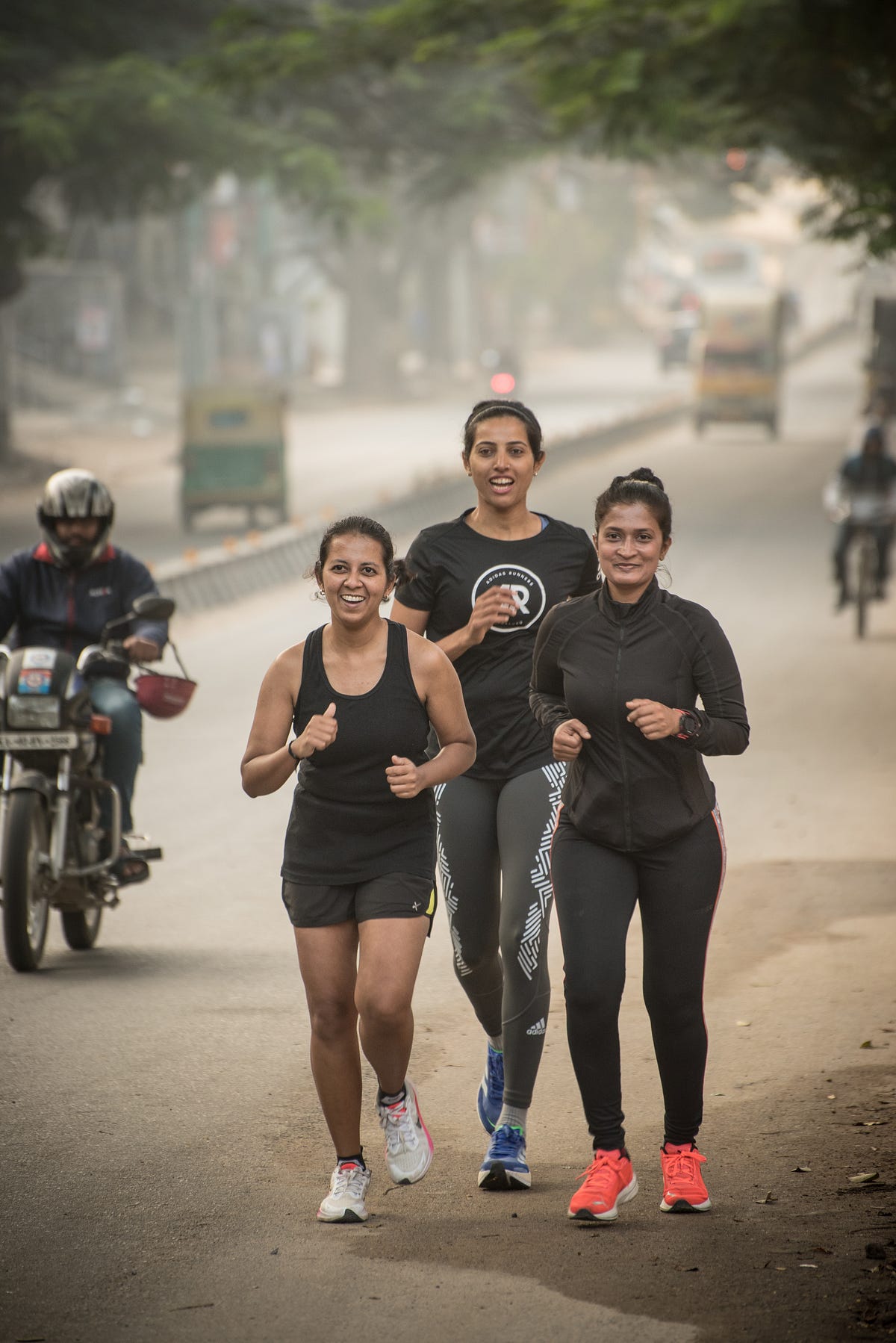
What I wish I’d known sooner is this:
You don’t need perfect gear, perfect weather, or perfect form.
You just need a plan, a why, and the courage to start messy — and keep showing up.
So all one needs is either Think-Believe-Achieve or Grit-Guts-Glory.
 Prathima's Miles & Milestones
Leave a comment